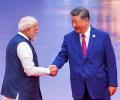
India and China held diplomatic talks to review the situation along the Line of Actual Control (LAC), discussing boundary delimitation, border management, and trans-border cooperation. Both nations stressed the importance of maintaining peace and tranquillity for bilateral relations and agreed to continue using existing channels to resolve outstanding issues.

China and Bhutan held the 15th Expert Group Meeting to discuss boundary alignment, focusing on areas where there are no disputes, and agreed to maintain the momentum of negotiations.

Japan is deepening its defence relationship with India while simultaneously expanding its economic, infrastructure and security engagement with countries around India -- particularly Bangladesh. The result is an emerging Japanese conception of South Asia in which India remains the strategic anchor, but the geography surrounding India is becoming increasingly important, points out Varun Arya.

India and China held constructive talks on the situation along the Line of Actual Control (LAC) in eastern Ladakh, emphasising that maintaining border peace and tranquillity enabled progress in normalising overall relations.
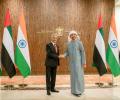
Frankly, was it really necessary in the middle of a fratricidal war for External Affairs Minister S Jaishankar to travel to Abu Dhabi for a one-on-one with the sheikh on April 12?Or, for National Security Advisor Ajit Doval to follow up on April 26? Or, for PM Narendra Modi to follow through today? There are no easy answers, notes Ambassador M K Bhadrakumar.

India and China reviewed the situation along the Line of Actual Control (LAC) in eastern Ladakh and prepared for the next Special Representatives' dialogue on the boundary question.
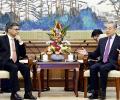
India and China held diplomatic talks in Beijing, focusing on effective border management and the resumption of cross-border cooperation and exchanges, including on trans-border rivers and the Kailash-Mansarovar Yatra. The meeting explored measures and proposals to implement decisions made during the Special Representatives (SR) dialogue in December. Both sides agreed to work together for the next SR meeting in India later this year.

India and China have held their first diplomatic talks since withdrawing troops from two face-off points in eastern Ladakh, reflecting on the lessons learned from the border row to prevent future incidents. The two sides agreed to maintain peace and tranquillity in border areas, prepare for the next meeting of Special Representatives on the boundary question, and highlighted the importance of regular exchanges and contacts at diplomatic and military levels. The talks come after the completion of the disengagement process from the last two friction points, following an agreement finalized in October 2022.
India and China have agreed to take measures to further ease the situation at the borders while continuing to implement the October agreement to resolve the standoff in eastern Ladakh comprehensively. The two sides held the 32nd meeting of the Working Mechanism for Consultation & Coordination on China-India Border Affairs (WMCC) in New Delhi, agreeing to maintain communication through diplomatic and military channels and safeguard sustainable peace and stability in the border areas. This meeting follows the October 21 agreement between the two countries to resolve the over four-year-long military standoff in eastern Ladakh.
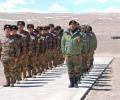
The Working Mechanism for Consultation and Coordination on India-China Border Affairs (WMCC) was established in 2012 as an institutional mechanism for consultation and coordination for the maintenance of peace and tranquillity in the border areas.
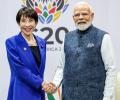
If they act now, they can reshape the strategic map of Asia without firing a shot. If they wait, the next opportunity will come only after a serious Taiwan Strait incident -- by which time the price will be far higher, and the room for boldness far smaller -- the opportunity may well be lost by then. The question is no longer whether this can or should be done, points out Varun Arya.
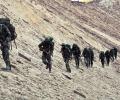
During the meeting, it was reiterated that "restoration of peace and tranquillity, and respect for the LAC are the essential basis for restoration of normalcy in bilateral relations", it said.
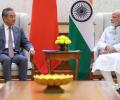
'New Delhi is not naive about its foreign policy choices.'

The virtual talks took place under the framework of Working Mechanism for Consultation and Coordination on India-China Border Affairs.
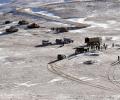
The Indian and Chinese troops are locked in an over three-year confrontation in certain friction points in eastern Ladakh even as the two sides completed disengagement from several areas following extensive diplomatic and military talks.

India and China on Wednesday held 'constructive' and 'forward-looking' diplomatic talks to resolve the over four-year border standoff along the Line of Actual Control (LAC) in eastern Ladakh but there was clear no indication of any breakthrough.
'Had Haji Pir and/or Skardu been taken, the message would have gone out not just to General Asim Munir and his cohort in the Pakistan army but to the Pakistani people that every terrorist incident in India would lead to substantial loss of territory in PoK.'

'Tensions and dialogue are likely to go hand-in-hand with China.' 'The goal should be to cultivate power so that one can negotiate from a position of strength.'

The key meeting was held in Beijing on March 27, the MEA said in a statement.

Engagement with neighbours is a strategic imperative, and not an option, asserts Rup Narayan Das.
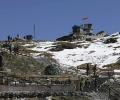
She provided no evidence for the claim, which is at the complete variance with Bhutan's stated position.

Relations between India and China have been in an 'abnormal state' since the 2020 Galwan clash and it is a 'possibly longer than medium-term issue', External Affairs Minister S Jaishankar said in New York.
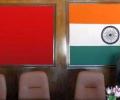
The Indian delegation at Thursday's talks is likely to be led by Naveen Srivastava, Joint Secretary (East Asia) in the external affairs ministry, they said.
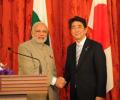
India and Japan are natural partners at sea, and Narendra Modi's recent visit underlined the need to keep the association going

Jaishankar, who arrived in Santo Domingo on his first official visit to the Dominican Republic, also said that India has seen a dramatic expansion in connectivity, contacts, and cooperation across the region.
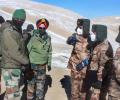
India and China on Tuesday agreed to hold the next round of the Senior Commanders meeting at an early date to achieve complete disengagement from all friction points in eastern Ladakh to create conditions for the restoration of normalcy in bilateral ties.

It is time the political leaderships in this country arrived at a common ground over issues of foreign and security policy concerns. There has to be a greater communication between the government and the Opposition leaderships for the nation to present a unified face against the rest of the world, advises N Sathiya Moorthy.

Rulers in New Delhi and their political aides in sensitive states like Tamil Nadu have to be doubly careful not to provoke a situation whose consequences may be much more than visible now to the naked eye, notes N Sathiya Moorthy.

External Affairs Minister S Jaishankar on Tuesday took a strong stance on the Indo-China border issue by saying that any unilateral attempt to change the Line of Actual Control (LAC) will not be 'countenanced' by India.

'Chinese government, people and the military were angry over India's dangerous move in Doklam'

Delhi finds itself between the rock and hard place in the coming Sri Lankan election, points out Ambassador M K Bhadrakumar.

The Wednesday talks took place amid a war of words between the two sides on perception of the LAC, the de-facto Sino-India border spanning a length of nearly 3,500 km.

'This special meeting reiterates our belief in the time-tested principles of international relations'

'No analogy is perfect, but a better liquid to liken data to is water, with the global internet like a great borderless ocean of currents and tides,' Facebook's vice-president, global affairs and communications, Nick Clegg, said in New Delhi.

He said both sides reaffirmed to sincerely work towards complete disengagement of the troops along the LAC.

India and China on Friday held 'in-depth' discussions on addressing the remaining issues along the Line of Actual Control (LAC) in eastern Ladakh, holding that disengagement in the North and South banks of Pangong lake provided a good basis to work towards their early resolution.

Chushul and Depsang are not vital in this game of Chinese checkers, the Indian Ocean Region is. Keeping our maritime prowess restricted has to be a key Chinese strategic interest and it would appear that the LAC affair has helped China achieve its aim, points out Vice Admiral Premvir Das (retd).
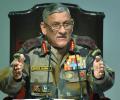
The air defence command is to be rolled out by the beginning of next year and the Peninsula command by the end of 2021, Gen Rawat told a select group of journalists. The Indian Air Force will helm the air defence command and all-long range missiles as well as air defence assets will come under it, he said.
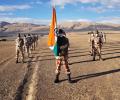
India and China on Friday agreed to hold the next round of military talks at an early date to achieve the objective of complete disengagement in remaining friction points in eastern Ladakh amid fresh sparring between the two sides on the prolonged Line of Actual Control (LAC) standoff.

'India does not wish to remain silent in improving its strategic space so that its leverage to counter China's expansionist designs is maintained, besides enabling it to play a responsible role from a position of strength for peace and stability in Asia,' points out Dr Rajaram Panda.
